NB. sample only , lots chopped out
STABILITY
All boats are dangerous, even large ships sink! We take a risk when we take a tiny craft like a yacht to sea. There are many factors which can affect that risk and one is the vessel's stability.
A stable boat will return to an upright position after being "tipped" by wind, sea, or movement of cargo or crew. This force trying to right the boat is governed by various things.
- Mass of the vessel. The heavier the boat, the more force is needed
to tip her over.
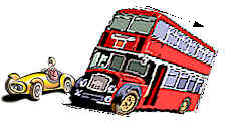
- Centre of Gravity. (CG) This is the force that makes a doubledecker bus fall over when cornering at a slower speed than a car. the bus has more weight higher up in proportion to its overall weight. (Gravity is a downwards force)
- Centre of Buoyancy. (CB) This is more difficult to describe, but it is the position of the centre of the volume of water displaced. This centre of Buoyancy moves as the boat is heeled, acting against the force trying to tip her over. (Buoyancy is an upwards force)
lots chopped here
So the further outboard the CB can move, the more stable the boat?
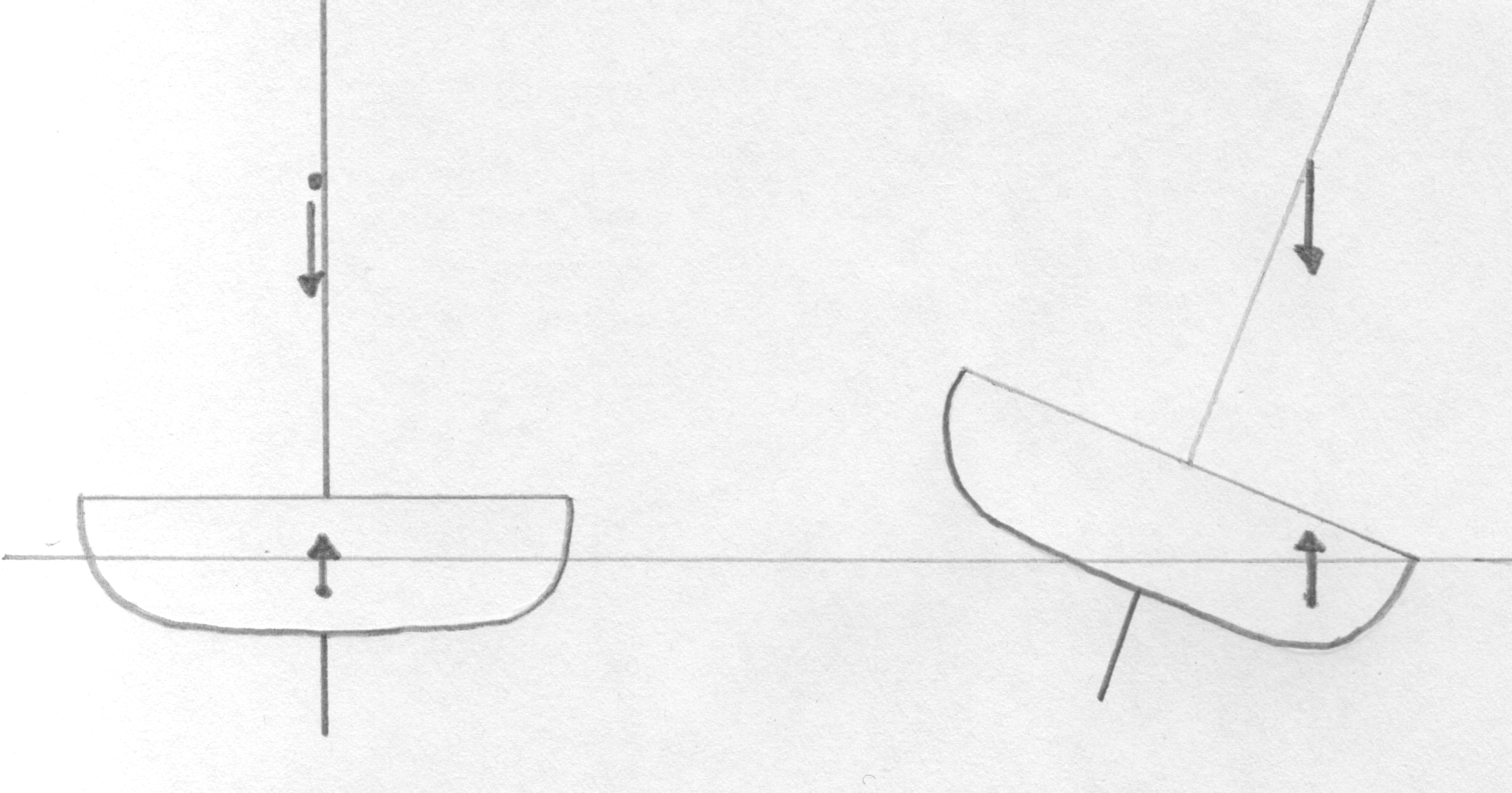
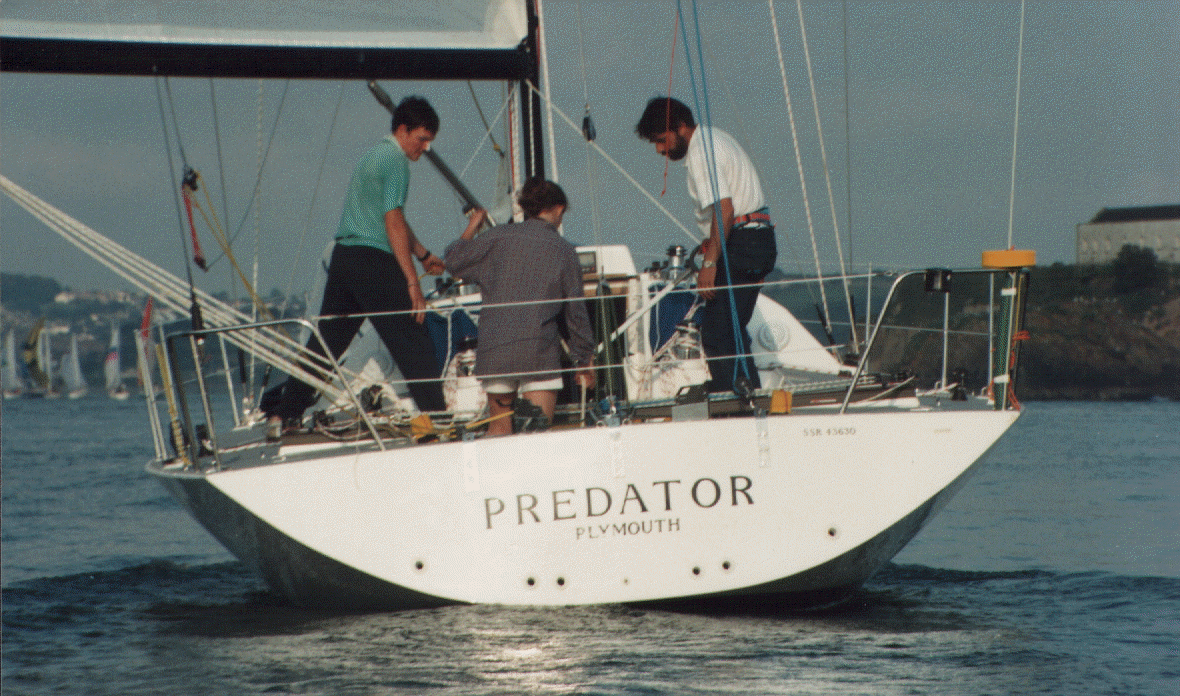
That is true to a certain extent. Wider hulls have more initial stability. The problem with these very wide hulls is that when the boat does eventually capsize, she is happy to stay up side down. Catamarans, Trimarans and many modern high volume cruising monohulls, even deep sea ocean racers with wide flat hulls are at risk here. They are very "stiff" (high initial resistance to heeling) and this makes them very powerful as they can carry large amounts of sail in strong winds, but once the buoyancy of the wide hull is overcome, they are in grave danger. Having capsized, the wide flat decks of vessels like this stop the boat from righting herself.
Modern boats have a calculated Stability category. This gives the skipper an
idea of the likely characteristics of a given vessel. Ask the builder or broker
for a Stability Analysis. This is a sign graph comparing righting moment to
angle of heel. It is possible to see the yachts stability category from one of
these curves and also to get an idea of how stable the vessel is when she is
inverted.
Yachts are given a category either a, b, or c. Category A is given to vessels
who's calculated stability means that they can recover from a knock down of
about 130º without inverting. Category B can recover from 120º and Cat C from
only 95º
Here are two stability curves (They are for the purpose of explanation and
not actual boat curves)
The curve on the left is one you might find for a vessel with high initial
stability (wide beam) A small light weight keel and wide flat decks. Area A is
large, so she is likely to stay inverted for longer. Although she has higher
initial stability, she cannot recover from about 100º heel angle.

lots chopped again
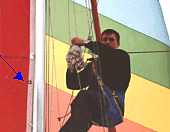
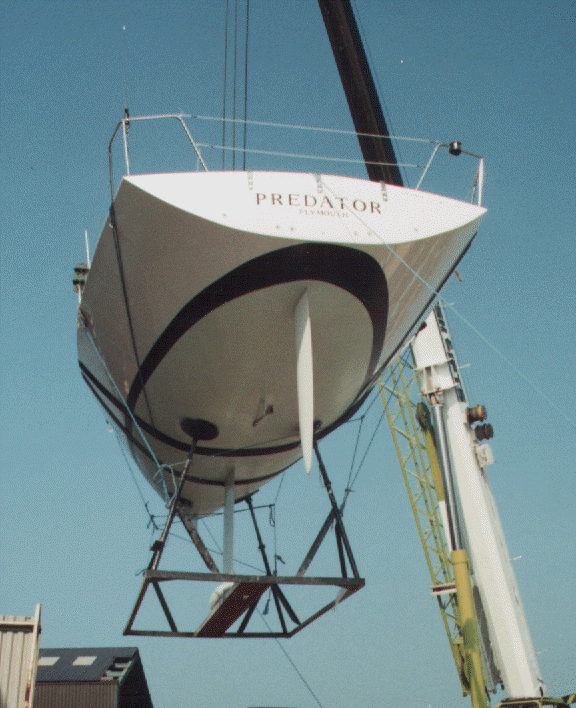
A few words here about likely chafe areas. On modern yachts it is a major
problem due to the introduction of full battened mains sails and swept back
shrouds. Here Steve is fitting a baggy wrinkle
to stop the worst of it.
Swept back shrouds cut out the need for backstays and therefore allow more roach
to be carried. To stabilise this roach we need full length battens.
When running down the wind with this rig, chafe is a nightmare. Baggies are dead
easy to make and they are the best chafe protection I have found. These big
mains with large headboards also tend to chafe halyards at the mast head sheave.
Chafe is found in other areas too and not just on sails and halyards. A
dinghy tied down to the deck in a storm can if it moves at all, soon chafe
through its lashings and we have just had a 35 foot Cat break loose from its
mooring due to chafing of her swinging mooring lines. Watch out for chafe or
it'll cost you!
Lots chopped here
Also available, but not widely used aboard most cruising boats are Dyneema, Spectra,
Vectran , PBO Zylon and Aramid ropes. All these are very strong, eg Dyneema is
ten times the strength of steel!
It also floats and soaks up negligible amounts of water, therefore stays light
when wet and has good abraision and flex fatigue resistance.
They are all much lighter for
the same strength required and have hardly any stretch. On racing boats this
is very important. So, why don't we just use this stuff? It is obscenely expensive!
Oh yes. Some of these high tech ropes do not like our traditional knots and
need special ones. I am sorry, but I don't know them.
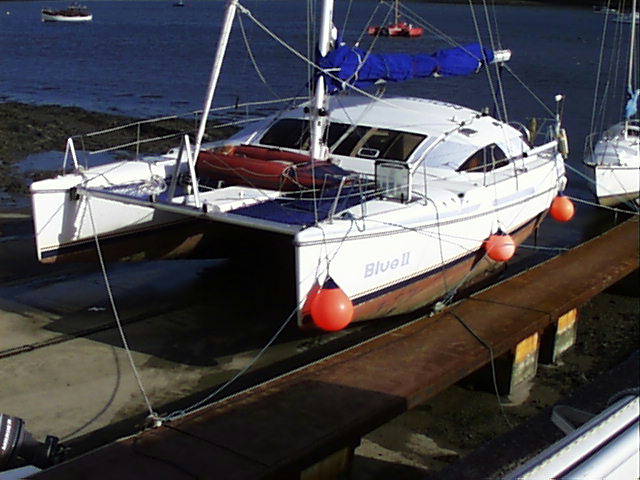 To
moor alongside safely in all weathers we need to use six lines from the boat to
the pontoon.
To
moor alongside safely in all weathers we need to use six lines from the boat to
the pontoon.
We all know that for a quick stop for lunch, when crew are staying aboard, it is permissible
to use only four mooring lines:
The trouble with this system is if any one rope breaks or a knot fails, the boat will move
a considerable distance, so much so that it could put too much strain on other
warps and they may also fail. Not good!
If you add to this lot an extra, longer bow line and an extra, longer stern line, each rope has a back up. This is also important if you are rafting out from another vessel. Her warps are built to hold her weight, not yours as well! .Put out bow and stern shorelines. Do not put too much weight on your breast lines, as by their nature they are short. Short lines snap. Use a longer bow and stern line to take the strain!
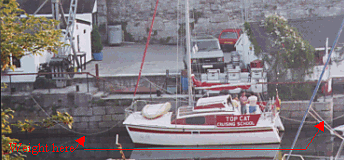 When
you have to cope with tidal rise and fall, then you must use warps which are at
least three times as long as the expected drop or rise in depth. These long
warps can be weighted in the middle to hold the boat close to the quay at high
water when the lines will be slack. Taking your lines to the outboard side of
the boat helps a lot here, particularly if you have a wide beam. you also need
to try to reduce chafe on your lines over the wall.
When
you have to cope with tidal rise and fall, then you must use warps which are at
least three times as long as the expected drop or rise in depth. These long
warps can be weighted in the middle to hold the boat close to the quay at high
water when the lines will be slack. Taking your lines to the outboard side of
the boat helps a lot here, particularly if you have a wide beam. you also need
to try to reduce chafe on your lines over the wall.
Some quays have chains
hanging down for the purpose. 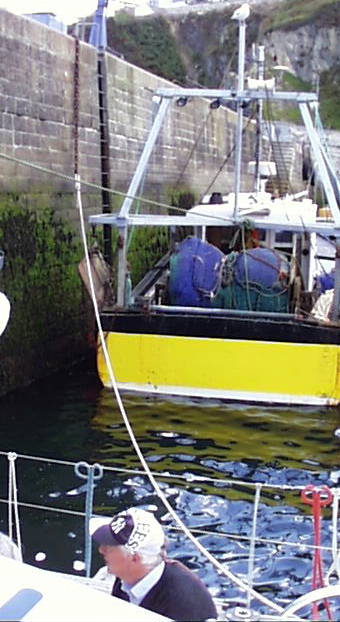
These also get rid of the need for weights.
Not a brilliant picture but you
can see that the chains cut out chafe
and their weight can be used to keep the
vessel alongside as the tide rises. ie pull the
lines in tight at low tide, then as the tide
floods, the chains hang vertically, keeping
the lines tight, and therefore the yacht alongside.
You can also see on this picture that long
bow and stern lines taken outboard from the
quay, cut out the need for breast lines and to a certain extent, springs. Using
springs on walls is tiresome as they tend to get caught on fenders and pull them
out. Whether you need them or not largely depends on the shape of your boat.
| CRUCIAL STUFF! |
|
lots chopped here
The Alpine Butterfly
This is actually a climbing knot used for
re belaying. We use it to produce a cleat like this. 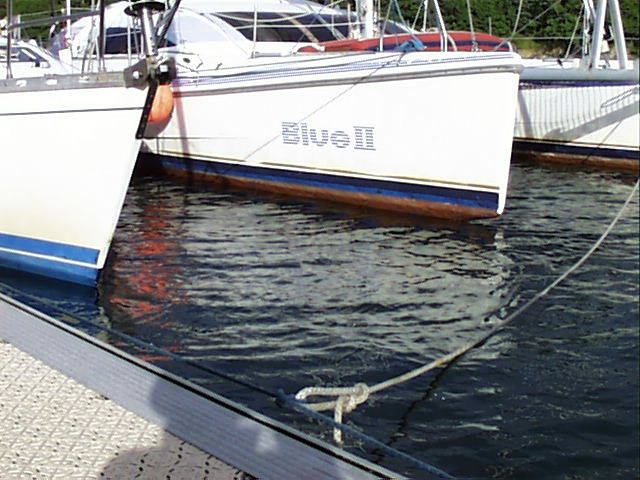
It is very bad form on a
windy day to shrug and say that there are not enough cleats to attach your shore
lines! You simply make a cleat in the right spot
If the boat ahead or astern makes it impossible for you to cleat a shore line.
Simply tie a rope between two cleats with an Alpine Butterfly at the position
you would like a cleat.
You could use a figure of eight on the bight, but try untying it afterwards!
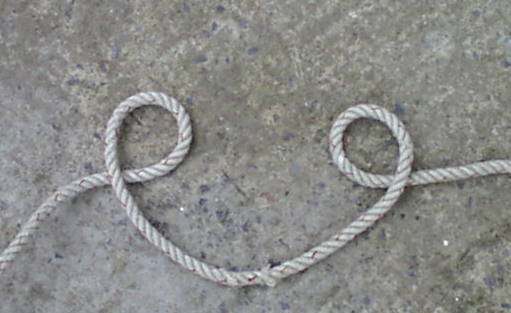
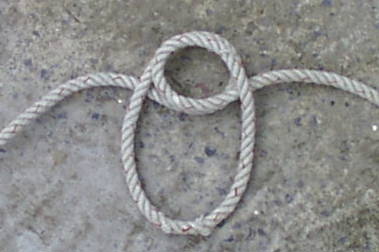
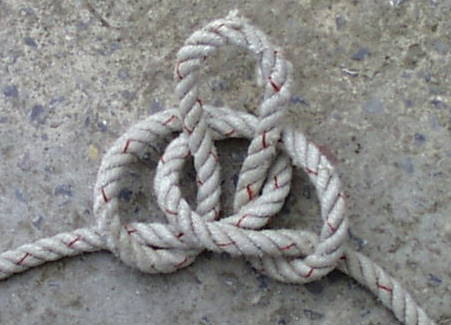
Its easy. Make two
loops.
Put one on the other. The bight goes through the loops.
The Tugman's hitch When you have no cleats left unused, then 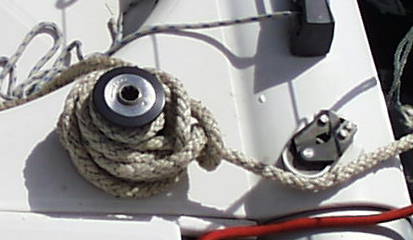
you can
use a winch just as securely.
It will not jam and if you need to adjust the line, you have it on a winch
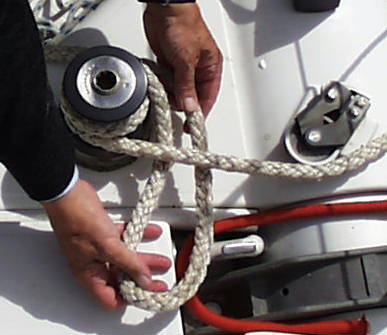
Tension the line with the winch then take a loop under as shown
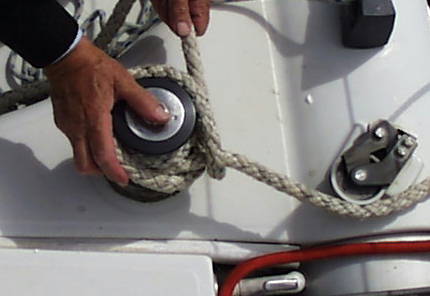 Next,
just drop the loop on the winch. Now pull (my left hand)
Next,
just drop the loop on the winch. Now pull (my left hand)
next take an anticlockwise turn around the winch and pass another loop under the
tight rope. Drop that on the winch and pull tight again. Three loops is bomb
proof.
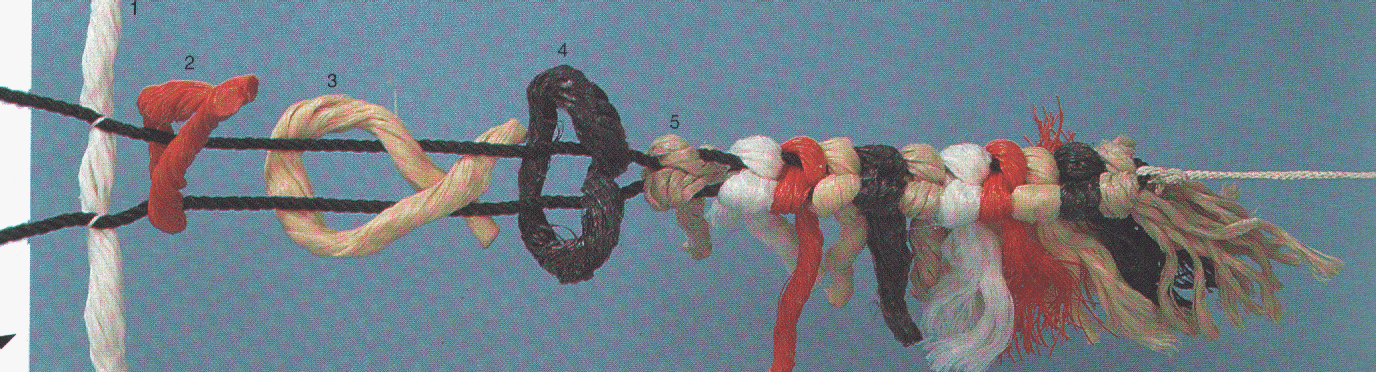 To
stave off boredom on some long passage and to stop chafe, you might get into
making Baggy wrinkles They are dead easy and
made out of old rope that otherwise you would throw away.
To
stave off boredom on some long passage and to stop chafe, you might get into
making Baggy wrinkles They are dead easy and
made out of old rope that otherwise you would throw away.
When you have about a meter of this. Tie off the end then tease open the
fibres to produce this:-
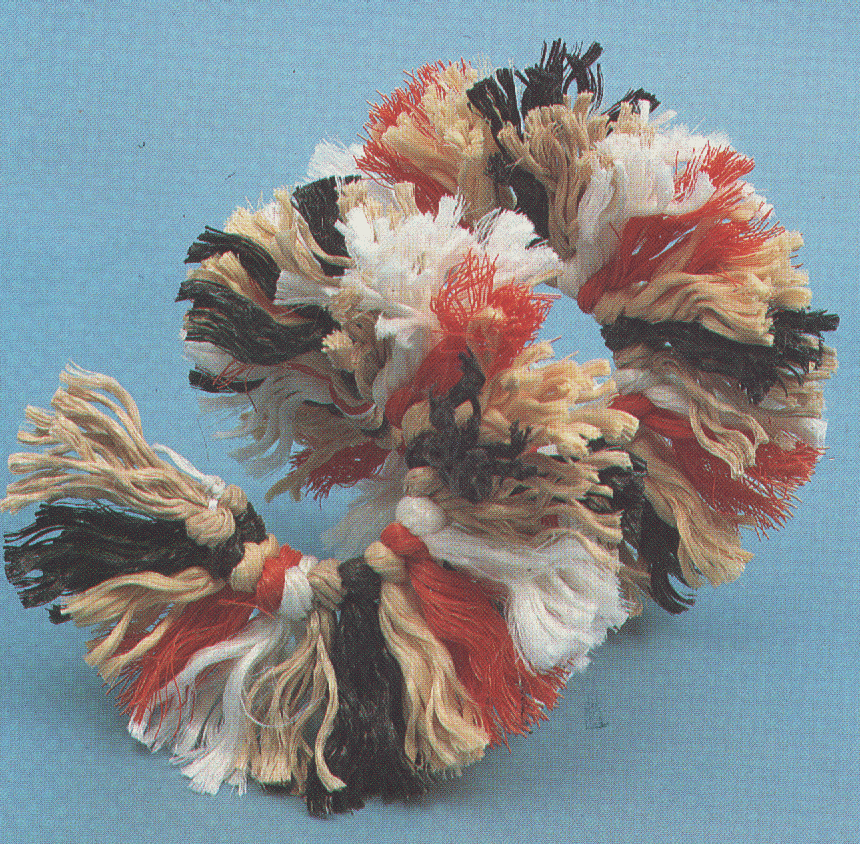 All you do then is go aloft in a Bosuns chair and wrap the baggy around the
shroud in the correct area. Whipping twine is the best way of securing them at
both ends.
All you do then is go aloft in a Bosuns chair and wrap the baggy around the
shroud in the correct area. Whipping twine is the best way of securing them at
both ends.
| CRUCIAL STUFF! |
|